
City walks mean elevators, crowded sidewalks, sudden scooters, and the occasional “wait, we have to go back up for poop bags.” A good harness gives you control without choking your dog when the elevator doors open onto chaos.
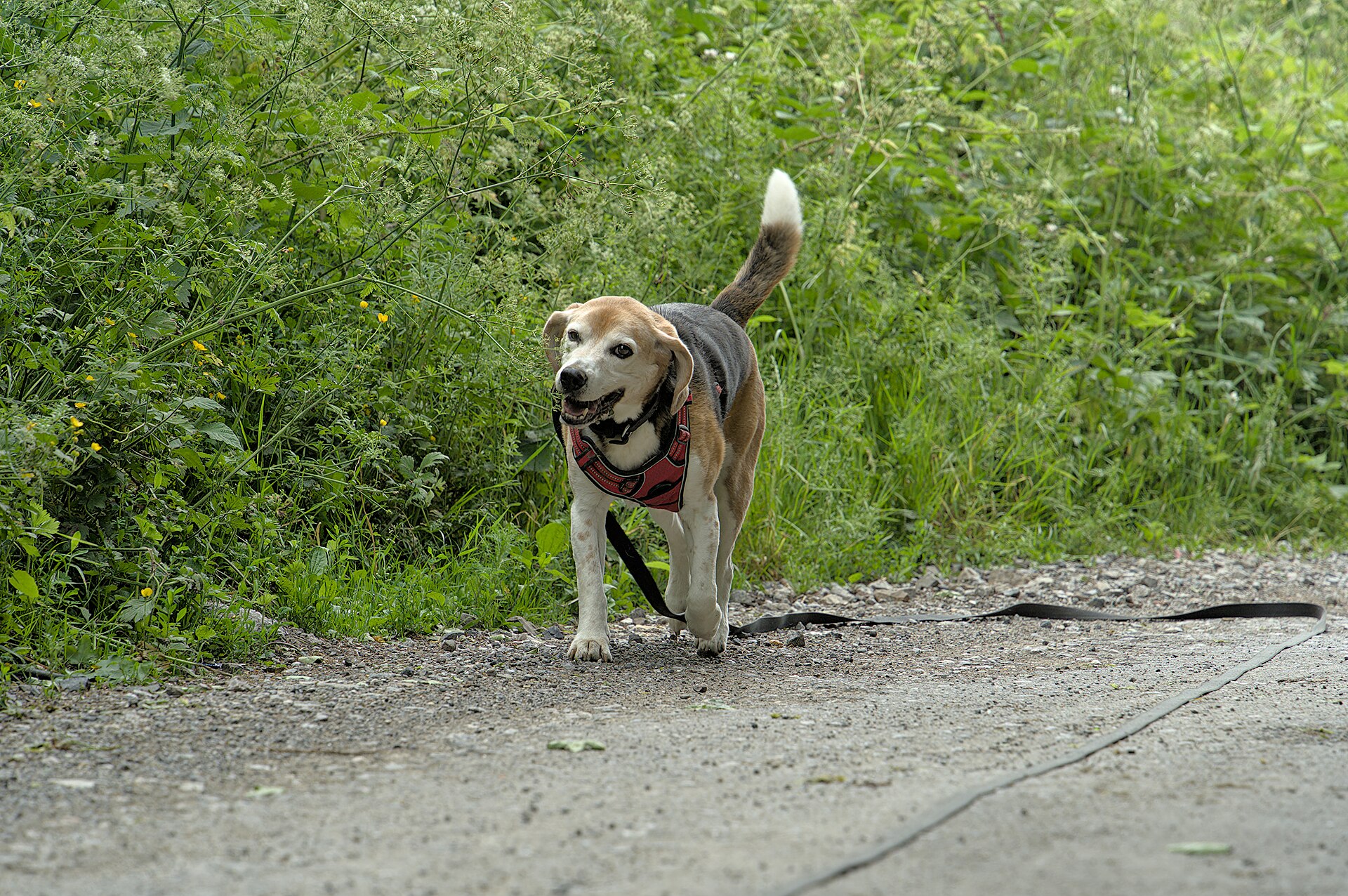
Here are three harness styles we think work well for urban life, plus a simple guide to fit and everyday use.
Quick Picks
| Harness | Approx. Price | Style | Best For |
|---|---|---|---|
| Ruffwear Front Range Harness | ~$40–$60 | Everyday padded, two leash clips | All-around city walking |
| PetSafe Easy Walk Harness | ~$20–$35 | Front-clip no-pull | Dogs who surge toward every smell |
| Rabbitgoo No-Pull Harness | ~$15–$30 | Budget dual-clip with reflective trim | Night sidewalks on a budget |
Prices change often. Check the current price at each link.
1. Ruffwear Front Range Harness
Check Amazon for current price: Ruffwear Front Range Dog Harness
The Ruffwear Front Range is a favorite for daily city walking: padded chest and belly panels, a sturdy handle for elevator moments or curb help, and both front and back leash attachment points. The handle alone is worth it when you need to steady your dog as people pour into a small elevator car.
It’s an everyday harness, not a tiny fashion vest—measure chest girth carefully and follow Ruffwear’s size chart. A well-fitted Front Range stays put when your dog spins to watch a delivery cart.
Best for: Most city dogs who need a comfortable daily harness with a grab handle.
Pros
-
Comfortable padding for longer urban walks
-
Front and back clip options
-
Handle helps in elevators, trains, and tight spots
-
Reflective trim for dusk sidewalks
Cons
-
Costs more than basic no-name harnesses
-
Bulkier than a minimal step-in for tiny dogs
-
Needs a correct size—guessing leads to rubbing
-
Not a heavy-duty car crash harness (use a separate auto restraint if needed)
2. PetSafe Easy Walk Harness
Check Amazon for current price: PetSafe Easy Walk Harness
The Easy Walk is built around a front clip that steers a pulling dog back toward you instead of letting them lean into a back clip like a sled dog. On busy sidewalks, that extra steering helps you keep space from bikes, strollers, and other dogs.
It’s lighter and simpler than a fully padded hiking harness. Fit matters: the martingale-style loop and belly strap need adjusting so it doesn’t ride up into the armpits. Pair with treats for loose-leash practice—equipment helps; training sticks.
Best for: Pullers who make every block a workout for your shoulders.
Pros
-
Front-clip design discourages hard forward pulling
-
Lightweight for everyday apartment-to-park trips
-
Widely available sizes and colors
-
Less throat pressure than a flat collar for pullers
Cons
-
Some dogs need a short adjustment period to the steering feel
-
Not as plush for long trail days
-
Improper fit can cause chafing behind the front legs
-
Escape artists may need a backup clip or different style
3. Rabbitgoo No-Pull Harness
Check Amazon for current price: Rabbitgoo No Pull Dog Harness
Rabbitgoo-style no-pull harnesses are popular budget picks with front and back rings, reflective stitching, and a bit of padding. For night walks between streetlights—or early morning elevator runs—reflective detail is more than a nice-to-have.
At this price, it’s easier to keep a spare in your entryway basket or gym bag. Check stitching periodically; budget gear works best when you inspect it like a renter inspects a smoke detector.
Best for: Budget-conscious city walkers who still want dual clips and reflective trim.
Pros
-
Dual leash points for training flexibility
-
Reflective elements help in low light
-
Affordable enough for a backup harness
-
Soft straps on many versions for daily wear
Cons
-
Quality control can vary more than premium brands
-
Sizing charts differ—measure and read recent reviews for your dog’s build
-
May not hold up as long as higher-end hiking harnesses
-
Hardware should be checked often for wear
Buying Guide: What Matters in a Small Space (and on City Sidewalks)
Fit over fashion. You should fit two fingers under straps. Armpits shouldn’t rub. The harness shouldn’t slide toward the neck when your dog pulls.
Front clip for training, back clip for casual. Many City Pups households use front clip for busy blocks and back clip for calm neighborhood loops.
Elevator handle. A top handle is underrated when doors open onto dogs, carts, or loud lobbies.
Reflective gear. Dawn and dusk commuting dog walks are real. Reflective trim or a clip-on light helps.
Quick on/off in the entryway. Step-in vs. overhead styles are personal—pick what you can do with coffee in one hand without blocking the hallway for five minutes.
FAQ
Harness or collar for city dogs?
Many people walk on a harness and keep ID on a collar. That way a slip doesn’t mean a lost tag. Follow your local leash laws either way.
Will a no-pull harness fix pulling forever?
It helps management. Short training sessions still matter—especially around elevators and building doors where excitement peaks.
Can I leave the harness on in the apartment?
Better to remove it when you’re home so skin can breathe and straps don’t catch on furniture. Hang it by the door for a clean exit routine.
Which One Should You Pick?
Start with your dog’s walking style:
-
Want an everyday padded harness with a useful handle? Go with the Check Amazon for current price: Ruffwear Front Range Dog Harness.
-
Dealing with a dedicated puller on busy sidewalks? The Check Amazon for current price: PetSafe Easy Walk Harness is our steering-focused pick.
-
Need dual clips and reflective trim without a big spend? Try the Check Amazon for current price: Rabbitgoo No Pull Dog Harness.
Whichever you choose, practice calm elevator entries at quiet times first. Better gear plus a little training makes city walks feel shorter—in a good way—for every City Pups team.
Disclosure: City Pups is reader-supported. If you buy through links on this page, we may earn a small commission from Amazon or other retailers, at no extra cost to you. We only recommend gear we think suits apartment life.