
Short city walks don’t always empty a busy brain. When your dog still has energy and you don’t have a yard, puzzle toys turn kibble into a quiet job. That’s better for shared walls than zoomies off the couch at 9 p.m.
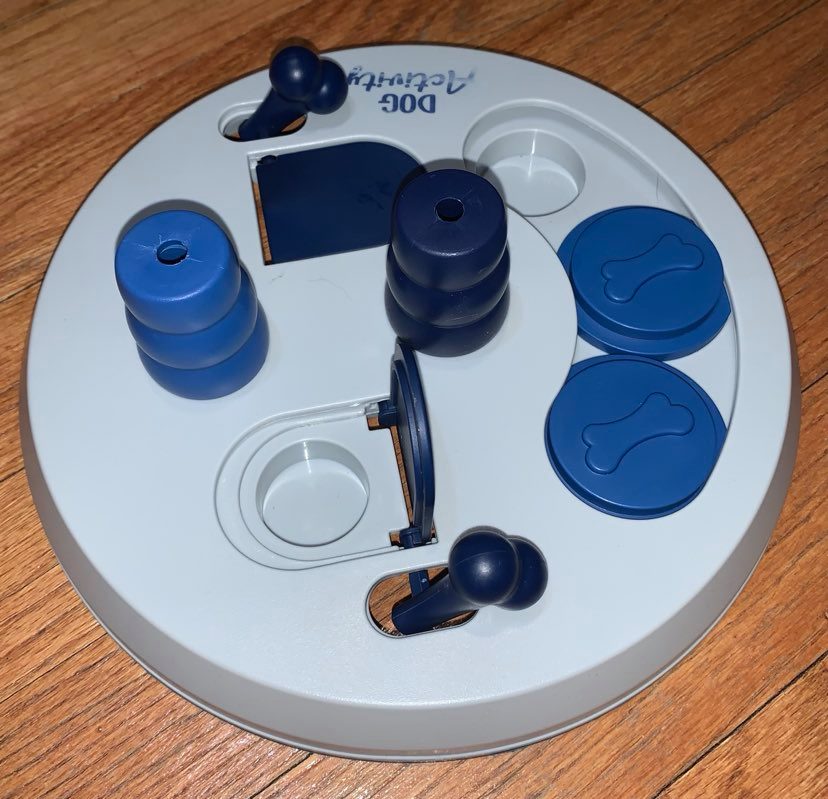
Here are three puzzle-style toys we think are worth a look, plus a simple guide to matching difficulty to your dog.
Quick Picks
| Puzzle | Approx. Price | Difficulty | Best For |
|---|---|---|---|
| Nina Ottosson by Outward Hound Dog Brick | ~$15–$25 | Beginner to intermediate | Nose-work style games on the floor |
| Kong Wobbler | ~$15–$25 | Beginner (adjustable fill) | Food-motivated dogs who like a wobble chase |
| West Paw Zogoflex Toppl | ~$13–$22 | Beginner+ (stuffable) | Stuff, freeze, and stretch calm time |
Prices change often. Check the current price at each link.
1. Nina Ottosson by Outward Hound Dog Brick
Check Amazon for current price: Nina Ottosson by Outward Hound Dog Brick Puzzle Toy
The Dog Brick is a classic board-style puzzle: hide treats under blocks and sliding pieces, then let your dog sniff and problem-solve. It’s quiet compared to squeaky toys—mostly soft sliding and nose sounds—and it works well on a rug in a studio.
Start easy with some compartments open so your dog wins fast. Frustration in a small apartment can turn into barking. Level up only when they’re confidently clearing the board.
Best for: Dogs who like using their nose and owners who want a reusable rainy-day game.
Pros
-
Quiet enrichment without squeakers
-
Adjustable challenge by how you bait it
-
Compact board stores in a shallow closet bin
-
Great after a short walk when brains still need work
Cons
-
Chewers may damage plastic if left unsupervised
-
Treat crumbs collect in grooves—wash regularly
-
Some dogs tip or ignore puzzles until taught
-
Not a fetch toy—different play style
2. Kong Wobbler
Check Amazon for current price: Kong Wobbler Treat Dispensing Dog Toy
The Kong Wobbler stands upright and tips as your dog nudges it, dropping kibble a little at a time. It turns dinner into a moving puzzle. On carpet it’s quieter; on hardwood it can clack—use a rug if you have downstairs neighbors.
Portion the same meal you’d put in a bowl so you’re not accidentally overfeeding. For apartments, this is one of the simplest “tired brain” tools that doesn’t need a big footprint.
Best for: Food-driven dogs who gobble meals and still want a job afterward.
Pros
-
Uses regular kibble—no fancy treats required
-
Adjustable challenge by how full you pack it
-
Builds slower eating habits
-
Durable Kong-brand construction for many dogs
Cons
-
Can be noisy on bare floors
-
Rolls into tight under-furniture spaces
-
Too easy if you underfill for a clever dog; too hard if jammed
-
Not ideal for dogs who guard moving food toys
3. West Paw Zogoflex Toppl
Check Amazon for current price: West Paw Zogoflex Toppl Treat Toy
The Toppl is a stuffable toy you can use alone or stacked in pairs for a tougher puzzle. Fill with mashed food, kibble, or yogurt (dog-safe), then freeze for a longer lick session. Licking is calming for many dogs—perfect when you need email time without a bark-a-thon.
West Paw’s material is tough and recyclable through their program. It’s quieter than a rolling dispenser because many dogs settle down to work on it in one spot.
Best for: Settling energy with lick-and-chew enrichment after city walks.
Pros
-
Stuffable and freezable for longer calm
-
Can increase difficulty by nesting Toppls
-
Quieter “park and lick” style vs. chase-the-wobbler
-
Durable everyday material; recyclable via West Paw
Cons
-
Needs washing—sticky fill gets messy
-
Power chewers still need supervision
-
Not a brain-board puzzle; different challenge type
-
Freezer space is limited in tiny apartment freezers—plan mini fills
Buying Guide: What Matters in a Small Space
Quiet beats clever if neighbors are close. Prefer lick mats, stuffables, and soft-slide boards over loud plastic chase toys at night.
Match difficulty. Too hard = giving up or chewing the toy. Too easy = 30 seconds of fun. Your dog should work a few minutes and succeed.
Use meal kibble. Enrichment shouldn’t always mean extra calories. Portion from breakfast or dinner.
Supervise new puzzles. Especially board games with removable bits.
Rotate two or three. A small bin with a Brick, a Toppl, and a Wobbler covers most moods without clutter.
FAQ
How long should a puzzle take?
Aim for roughly 5–15 minutes depending on the toy and your dog. If it’s over in 60 seconds, hide fewer treats in harder spots or freeze the fill.
Are puzzle toys okay for puppies?
Yes, with softer difficulty and supervision. Avoid small parts that could be swallowed.
What if my dog gets frustrated and barks?
Reset easier, demonstrate once, and reward early wins. Frustration barking is the opposite of why we bought the toy.
Which One Should You Pick?
Start with the kind of “job” your dog likes:
-
Loves sniffing and sliding pieces? Go with the Check Amazon for current price: Nina Ottosson by Outward Hound Dog Brick Puzzle Toy.
-
Inhales dinner and needs to slow down? The Check Amazon for current price: Kong Wobbler Treat Dispensing Dog Toy makes meals last.
-
Needs a calm lick-and-chew settle on the couch rug? The Check Amazon for current price: West Paw Zogoflex Toppl Treat Toy is our quiet-evening pick.
Whichever you choose, start easy, keep a washable mat under messy toys, and retire anything that gets destroyed into pieces. Busy brains make better neighbors—and that’s the whole City Pups idea.
Disclosure: City Pups is reader-supported. If you buy through links on this page, we may earn a small commission from Amazon or other retailers, at no extra cost to you. We only recommend gear we think suits apartment life.